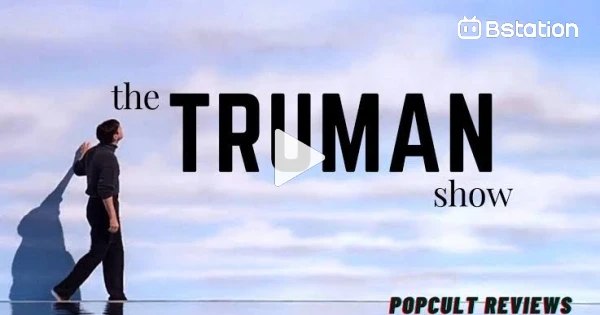
Holiday Ghosts' Truman Show Lyrics: A Musical Look at Control and Manufactured Reality
In an age saturated with curated digital lives and a constant stream of information, the themes explored in the 1998 film The Truman Show remain eerily resonant. It's no wonder that artists continue to draw inspiration from its chilling premise. Among them, indie band Holiday Ghosts released their track "Truman Show" in 2017, a song that brilliantly encapsulates the disorienting feeling of being controlled and the unsettling journey towards uncovering a manufactured reality. This article dives deep into the lyrics of Holiday Ghosts' "Truman Show," connecting them to the film's core ideas and exploring the universal struggle against unseen forces, a narrative concept deeply embedded in much of the compelling Truman Show videa that still captivates audiences today.
The Unsettling Echoes: Deconstructing Holiday Ghosts' Lyrics
Holiday Ghosts' "Truman Show," released on September 22, 2017, as part of their album Holiday Ghosts, is a raw, garage-rock infused anthem that perfectly mirrors the protagonist's growing paranoia and eventual defiance. The lyrics immediately plunge the listener into a world of suspicion and unease, echoing Truman Burbank's own dawning realization. From the outset, lines like, "They're acting real strange today / I can't figure out who's in on this game," perfectly capture the escalating anxiety that marks Truman's journey in Seahaven. He observes inconsistencies, strange repetitions, and unnatural reactions from those around him, sparking the initial flicker of doubt in his meticulously constructed world.
The sentiment is amplified with, "This town isn't fit for us now / I tried to escape but they won't let me out." This isn't just a metaphor; it's Truman's lived experience. His attempts to leave Seahaven are met with seemingly accidental yet highly coordinated obstacles – traffic jams, radiation leaks, sudden storms. The lyrics vividly paint a picture of an individual realizing their confinement, desperately seeking an exit from a reality that suddenly feels too small, too fake, and overtly hostile to their freedom. The repeated refrain, "I have no friends to ask / They're all just actors and I am the star," cuts to the very heart of Truman's existential crisis. This line is a direct, gut-punching reflection of his devastating discovery: every relationship, every interaction, every perceived intimacy, was merely a performance orchestrated for a global audience. For anyone watching a Truman Show videa, this realization is often the most heartbreaking moment.
The song moves beyond mere observation to a pivotal realization: "Take time to realize / It can't be real if there's no reasons to fight." This is a profound philosophical statement. A genuine life, a truly authentic existence, inherently involves struggle, conflict, and opposition. Truman's world, designed for comfort and predictability, lacked these vital elements, making its perfection feel inherently false. The lyrics challenge the listener to question their own realities, to seek out the authentic battles that define true living, rather than succumbing to "beautiful lies" that offer superficial peace. This sentiment resonates with the core message explored in Decoding The Truman Show: Individuality vs. Manufactured Reality.
Further lines like, "Don't ask the wrong thing, it's delusional minds / That fall apart with their beautiful lies," highlight the gaslighting and manipulation inherent in Truman's world. Those around him, the actors, were tasked with maintaining the illusion, often dismissing his concerns as paranoia or delusion. The song's protagonist, much like Truman, recognizes the crumbling facade and the fragility of the minds upholding it. Finally, the defiant cry, "Don't make me sit, it's a waste of my time / To stay at home, shedding hate from my bones," signifies the ultimate rejection of the controlled environment. It's a refusal to accept a passive existence, a declaration of intent to break free and experience genuine life, regardless of the cost.
The "Dude and a Problem" Trope: From Film to Song
The narrative structure of both The Truman Show and Holiday Ghosts' song fits a classic storytelling archetype: "a dude and a problem." As described by Leo Aizawa, this genre involves an average person—"just like ourselves"—confronting a monumental challenge. In The Truman Show, Truman Burbank is the quintessential average guy: a good job, a nice wife, a seemingly happy life in the idyllic town of Seahaven. His problem, however, is anything but average: his entire existence is a 24/7 reality television show, meticulously controlled by television giants and enacted by a cast of thousands.
Holiday Ghosts' lyrics effectively place the listener directly into this "dude's" shoes. The relatable sense of unease and the feeling of being "in on this game" transforms the listener into the protagonist facing an inexplicable problem. The lyrics emphasize the personal struggle against overwhelming, unseen forces. Just as movies like Breakdown with Kurt Russell demonstrate, the more average the protagonist, the bigger the challenge feels. And no matter the power of the antagonist, the "dude" triumphs through their willingness to embrace individuality and outsmart the forces aligned against them.
The song, like the film, celebrates the spirit of an individual who digs deep to conquer an external, seemingly insurmountable problem. The problem isn't just the physical confinement but the psychological burden of a fabricated reality. The raw, unpolished sound of Holiday Ghosts' music complements this theme, giving voice to the frustrated, desperate, and ultimately rebellious spirit of the "dude" who refuses to be contained or defined by someone else's script. Many popular Truman Show videa analyses focus on this triumph of the individual spirit.
Catalyst Moments and the Quest for Reality
Every compelling narrative has its "catalyst moments"—the pivotal events that shatter the protagonist's perceived reality and set them on a new, often perilous, path. Whether it's the mysterious package in Romancing the Stone, the life-altering phone call in Rain Man, or the unexpected breakup in Legally Blonde, these moments are designed to "knock it all down." For Truman Burbank, there isn't just one; there's a cascade. Sylvia's attempts to warn him, a studio light falling from the sky, the radio frequency picking up production commands, and critically, his father's unexpected (and unauthorized) reappearance after 20 years, all serve as powerful catalysts.
Holiday Ghosts' song captures the essence of these catalysts, translating the cinematic jolt into a lyrical awakening. The lines, "They're acting real strange today / Is it something I've done that's made them this way?" represent the initial stirrings of suspicion, the minor glitches in the matrix that Truman begins to notice. This internal questioning soon morphs into a profound philosophical realization: "Take time to realize / It can't be real if there's no reasons to fight." This is the lyrical equivalent of a catalyst moment, a sudden clarity that the absence of genuine conflict or friction is itself a sign of artificiality. It's the moment the protagonist shifts from passive observation to active questioning, setting the stage for their escape. This dramatic shift is often a focal point in discussions about the film's impact and themes, as seen in The Truman Show's Influence: Music Videos and Its Enduring Themes.
The song's energy builds with the growing certainty of manipulation, driving the protagonist towards action. The refusal to "sit at home" and the desire to escape confinement mirrors Truman's desperate sailing journey towards the edge of his world. These catalyst moments, whether in film or song, are crucial for demonstrating the individual's inherent drive for truth and authenticity, even when faced with overwhelming deception.
Finding Your Own Exit: Practical Reflections on Control and Authenticity
While Holiday Ghosts' "Truman Show" and the film itself tell a fictional story of extreme control, their themes resonate deeply with modern anxieties. In an increasingly interconnected world, where social media curates our perceptions and algorithms dictate much of what we see, the feeling of living in a "manufactured reality" can be surprisingly relatable. The song isn't just a commentary on the film; it's a rallying cry for self-awareness and agency.
- Question Your Feed: Just as Truman questioned the oddities in his town, take time to critically evaluate the information and narratives presented to you. Are you seeing a balanced view, or is it a carefully curated "show"?
- Seek Genuine Interaction: The song laments having "no friends to ask" because "they're all just actors." Prioritize authentic relationships over superficial connections. Genuine human connection, with its inherent imperfections and complexities, is a powerful antidote to manufactured realities.
- Embrace Conflict and Growth: The lyric "It can't be real if there's no reasons to fight" is a powerful reminder that growth often comes from overcoming challenges. Don't shy away from discomfort or disagreement; these are often signs of genuine engagement with the world.
- Recognize Your Agency: Feeling controlled can be disempowering. Holiday Ghosts' song, much like Truman's journey, is ultimately about reclaiming agency. Remember that you have the power to challenge narratives, make independent choices, and seek your own truth, even if it means stepping out of your comfort zone.
- Limit Passive Consumption: The song's protagonist rejects "stay[ing] at home, shedding hate from my bones." Actively engage with the world rather than passively consuming it. Seek experiences that challenge your perspective and expand your understanding.
By encouraging listeners to "take time to realize," Holiday Ghosts invites us to a similar journey of introspection and liberation that Truman undertook. The ultimate message is one of empowerment: the courage to question, to seek truth, and to chart one's own course, even when faced with "beautiful lies" and the temptation of a comfortable, yet ultimately fake, existence. This quest for authenticity is beautifully illustrated in countless Truman Show videa analyses and fan theories.
Holiday Ghosts' "Truman Show" stands as a powerful musical homage to a timeless film, distilling its complex themes into a punchy, relatable anthem. It’s a testament to the enduring impact of The Truman Show that its narrative of control, deception, and the search for authentic existence continues to inspire artists and resonate with audiences worldwide. The song, like the film, serves as a poignant reminder to constantly question our realities, challenge perceived limitations, and bravely step towards our own genuine horizons, no matter how daunting the journey beyond the perceived edge of our world may seem.